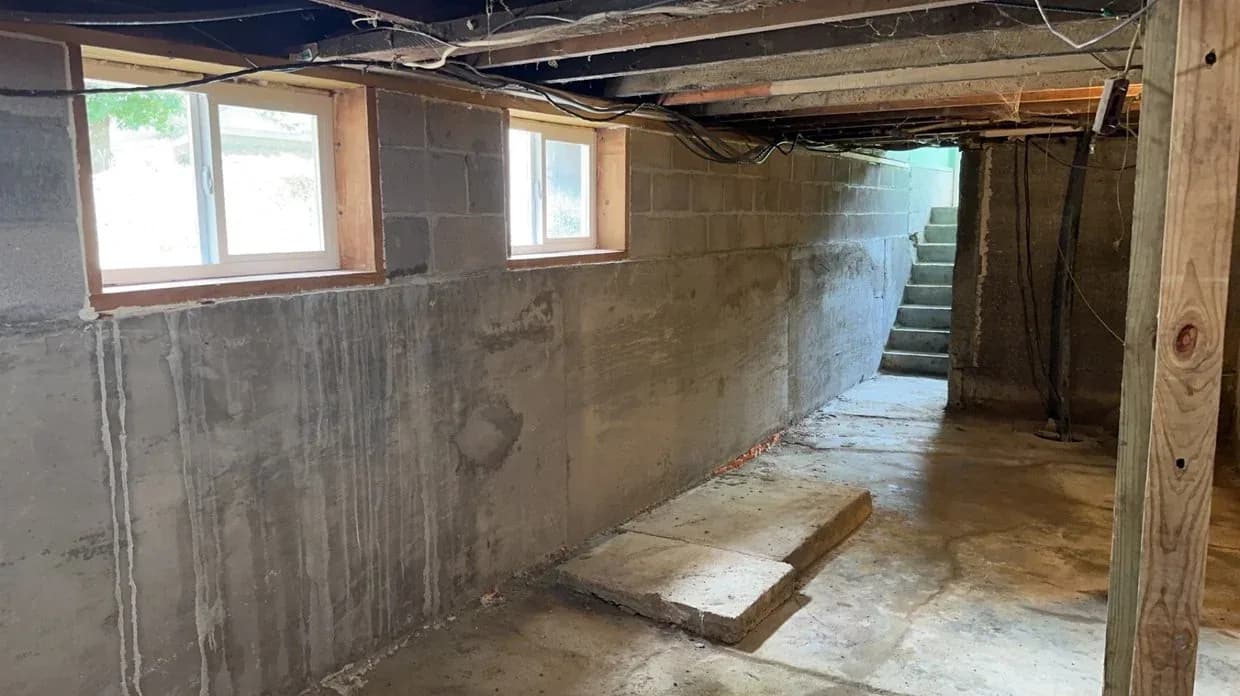
The shrink-swell cycle damages a foundation in two directions. When the clay swells with moisture, it presses against footings, slabs, and basement walls. When the clay shrinks in dry weather, it pulls away and withdraws the support the foundation was built on. The British Geological Survey (BGS) describes the mechanism plainly: clay-rich soils “can absorb large quantities of water after rainfall, becoming sticky and heavy,” and “become very hard when dry, resulting in shrinking and cracking.”
The movement is also uneven, and that is what actually breaks houses. Soil under a shaded corner holds moisture while soil under a sun-baked wall dries out, so one part of the foundation drops or lifts relative to the rest — differential movement. BGS notes that shrinkage “can cause uneven settlement,” and that subsidence cracks characteristically run diagonally across a wall. The zone where this happens is shallow: BGS puts the depth of seasonal moisture change at usually the upper 1.5–2 m of the subsurface, and up to 5 m — the same depth band where most residential footings sit.
Season by season, the general pattern looks like this. The soil mechanism is the cited one above; the house symptoms are the standard signs of that movement, which the Kansas Geological Survey lists as cracked foundations and walls and doors and windows out of plumb.
| Season | What the clay does | What the house shows |
|---|
| Dry summer / drought | Clay shrinks, cracks open in the ground, soil pulls away from footings | Settlement cracks appear or widen, doors and windows go out of plumb, gaps open at trim |
| Fall and winter rains | Clay rewets and swells, pressing against walls and slabs | Some cracks partially close, basement walls take inward pressure, doors stick in new places |
| Year over year | Repeated shrink-swell cycles move different parts of the soil by different amounts | Stair-step cracking in brick or block, sloping floors, cracks that reopen every year |
One year of this cycle is stress; a decade of it is structural damage. That is why clay-driven foundation problems tend to appear gradually and worsen in steps — often after an unusually dry summer or an unusually wet spring.