Skip to content
Call or text (620) 719-7366

Does Crawl Space Encapsulation Lower Energy Bills?

Pitt Foundation Repair teamPublished July 21, 2026Updated July 21, 2026

Crawl space encapsulation lowers energy bills mainly by controlling moisture: sealing the space against humid outdoor air and ground moisture reduces the humidity your HVAC has to fight and helps the floors above stay comfortable. The savings vary by home — the guaranteed win is a dry, healthier crawl space.

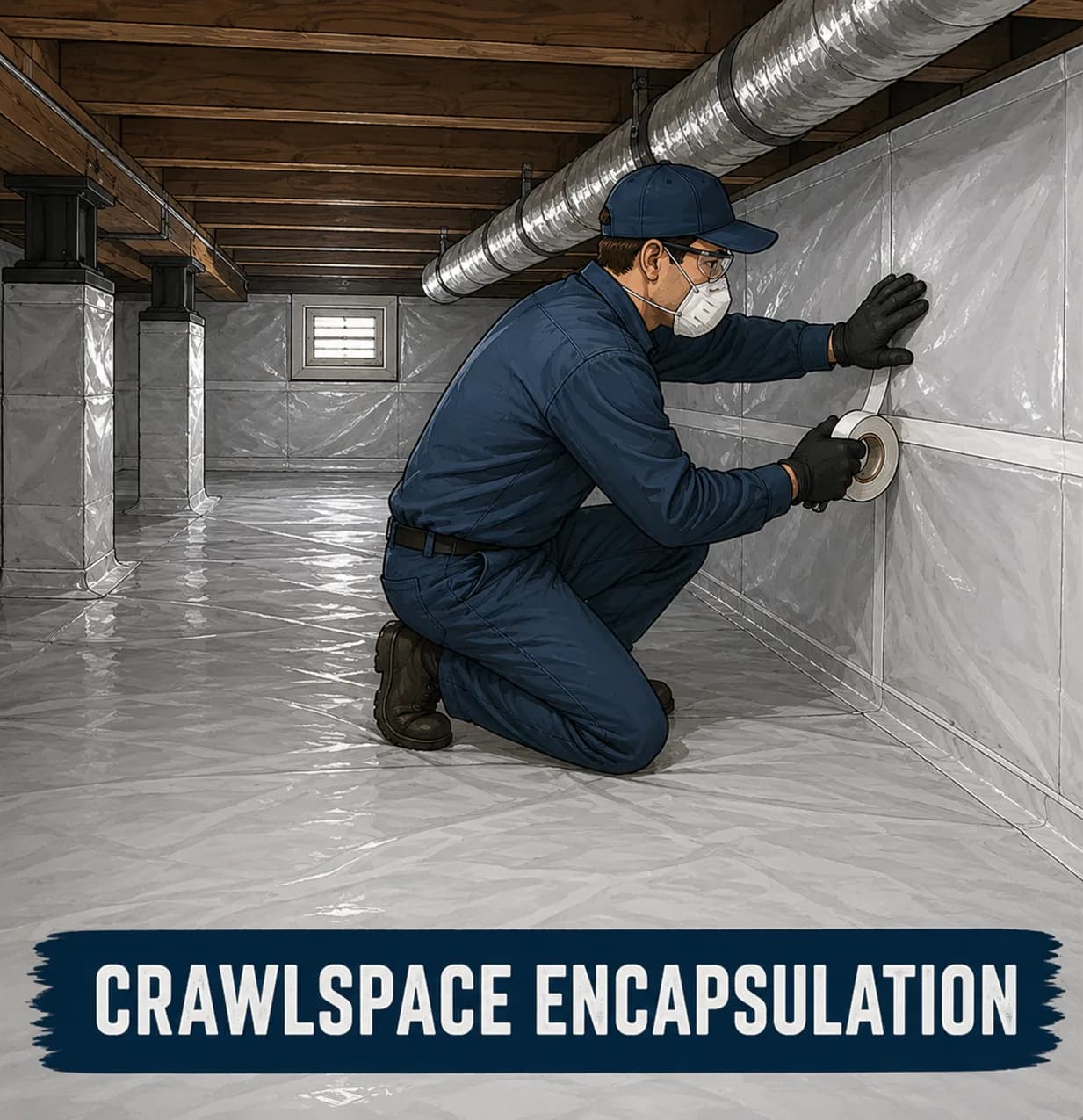
A crawl space sealed with a bright vapor barrier over the ground and walls

Does encapsulation actually lower energy bills?

How a damp crawl space wastes energy

What crawl space encapsulation involves

Why encapsulation has to be done right

Frequently asked questions

Will crawl space encapsulation really lower my energy bill?
It can, but the amount depends on your home. Encapsulation's documented job is moisture and air-leakage control — sealing the crawl space from humid outdoor air and ground moisture. Drier, sealed air is easier for your HVAC to condition, which supports comfort and efficiency. We won't quote a percentage we can't stand behind.
Is a sealed crawl space better than a vented one?
In humid climates, usually yes. The U.S. Department of Energy's Building America program treats a sealed, conditioned crawl space — insulated like a basement with a continuous ground cover — as the better approach, because open vents often bring in more moisture than they remove.
Does encapsulation help with humidity and comfort?
Yes. The EPA recommends keeping indoor humidity below 60 percent, ideally 30 to 50 percent. A sealed crawl space stops feeding humid air up into the home through the stack effect, which makes the rooms above easier to keep comfortable.
Can encapsulation be done wrong?
Yes. DOE warns that sealing moisture in — for example, an improperly installed vapor retarder — can trap water and cause ruined insulation, mold, odors, and rotting framing. That's why any standing water and drainage must be handled before the space is sealed.
Does a crawl space affect my indoor air?
Yes. Because of the stack effect, air is drawn from the lowest parts of a house up into the living space, so a damp, musty crawl space feeds that moisture and odor upstairs. Sealing the space is how you stop it at the source.

Sources